
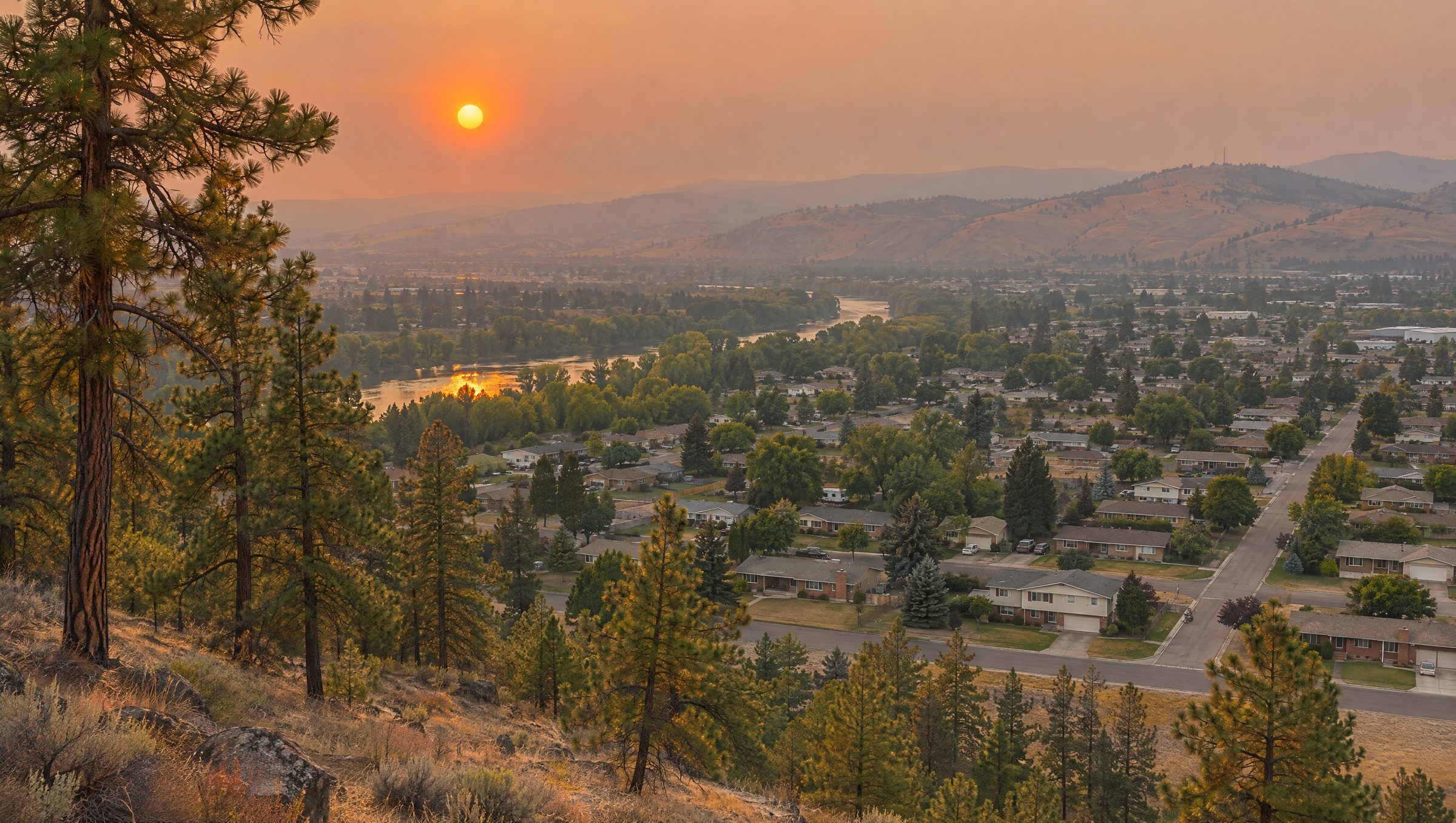
Heating and cooling in Spokane Valley, from the ridge to the room
Foxglove Heating & Cooling installs and services heat pumps, air conditioners and gas furnaces for homes in Spokane Valley, Spokane and the towns around them. We set each house up for the two hard seasons here: the smoke weeks, when the windows have to stay shut, and the long cold.
- Ducts tested and sealed where smoke and attic air get in
- A filter slot fitted for MERV 13 where the system allows
- Every replacement sized room by room
- A written price before any work starts
Tell us what the house does in August and January
We usually answer the same day, and within the hour when a house has no heat or no cooling.
No heat or no cooling and someone at home is elderly, unwell or very young? Call or text now: 509-555-0163
What a Spokane year asks of a house
From NOAA's 1991 to 2020 normals for Spokane International Airport and Spokane Clean Air's ten year smoke count. Dry, hot weeks when the air outside is smoke, and a long cold that follows them.
7.3days
Unhealthy smoke a year
Spokane Clean Air's average for 2017 to 2026, from wildfire smoke.
20.8days
At 90 degrees or more
The all time record is 109, on June 29, 2021.
132nights
At freezing or below
A normal January low is 24.7 degrees.
6,463HDD
Heating degree days
Against 515 cooling degree days. Heat is most of the work here.
How smoke gets into a house, and how we keep it out
Follow the air from the ridge to the room. In smoke season the air outside is the problem, and a closed house still breathes it in. Here is the path it takes, and the four places we stop it.
Outside
The smoke arrives
Smoke drifts in over the valley and settles. Spokane Clean Air says the fine particles in it, PM2.5, are the part that matters most for health. In September 2020 the state recorded more days of hazardous air at its monitors than at any time since 2000. Everyone shuts the windows. The house keeps breathing anyway.
The gaps
It finds the gaps
The EPA lists three ways in: open windows and doors, a system with a fresh air intake, and infiltration through small openings, joints and cracks. A door without a sweep. A can light with no seal. The attic hatch. With the windows shut, the gaps do the breathing.
The return
The return pulls it in
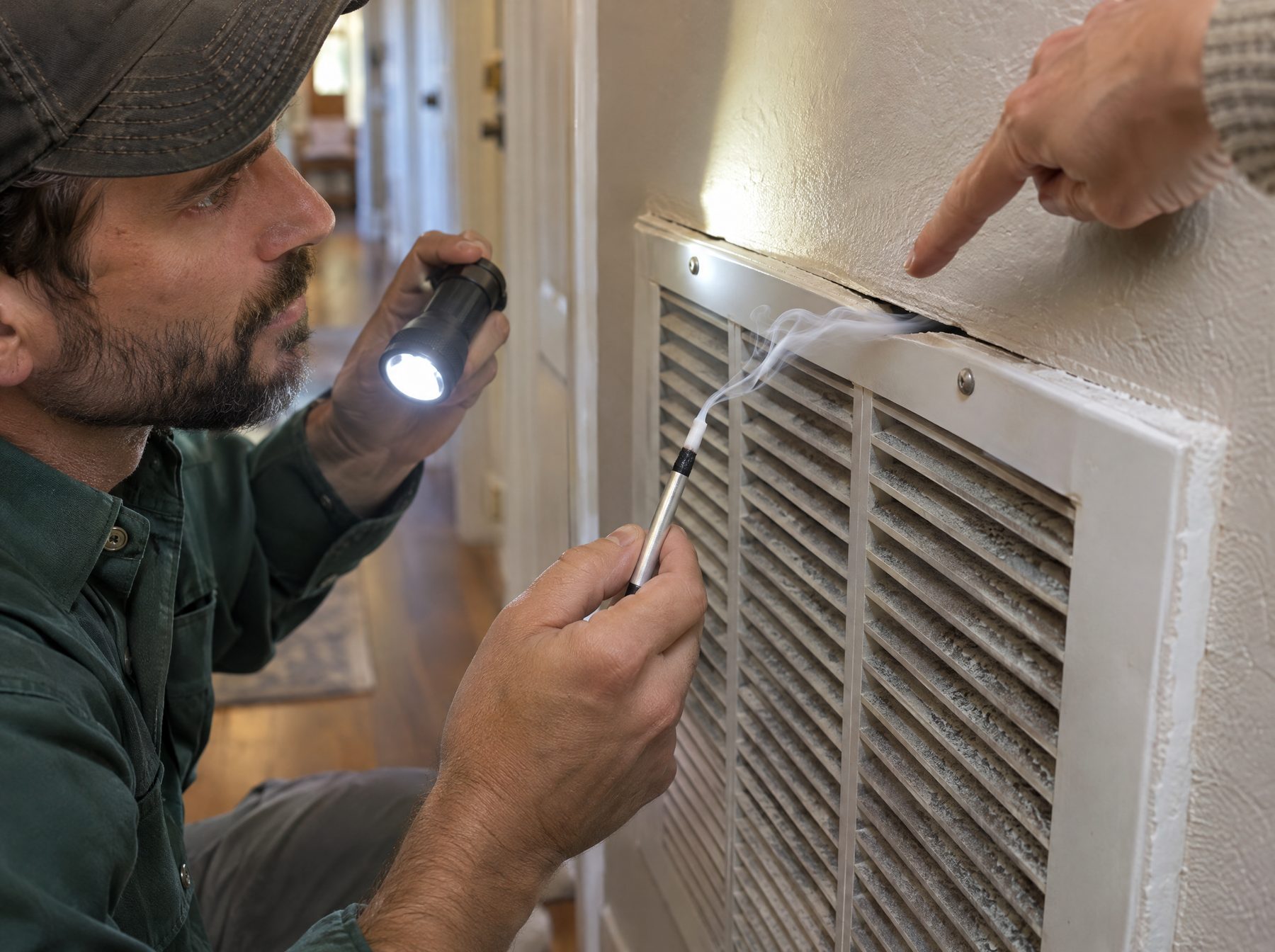
Every time the blower runs, the return side pulls air toward the furnace. If a return joint is open in the garage, the attic or the crawlspace, it pulls from there too, and sends it to every room. We put a smoke pencil to the joints and show you where the air comes from.
The filter
The filter catches it, if it fits
The EPA's advice is a MERV 13 filter, or as high as your fan and filter slot can take, and a snug fit so air does not go round it. A thin filter in a loose slot leaks at the edges. We check the fan, fit the slot so the filter seals and change it before smoke season.
The room
Windows shut, house cool, air clean
With the joints sealed, the filter snug and the system on recirculate, the air in the room is the air that went through the filter. The air conditioner, or the heat pump in cooling mode, keeps the house livable with the windows shut through a 90 degree week. That is the end of the trip from the ridge to the room.
Six services, from the ridge to the room
Every job here comes back to two questions: what does this house breathe in smoke season, and will it hold its heat through January? Each service has its own page with the details.
Heat pumps
Cold climate heat pumps sized room by room, with your gas furnace kept as the backup where it fits. Your heating all winter and your air conditioner through the smoke weeks.
AC installation
A new air conditioner sized to keep the house cool with the windows shut, with a filter slot built to take a MERV 13 where the system allows.
AC repair
Warm air, ice on the copper line, a breaker that trips, a condenser that quits in a heat wave. Found, shown to you and priced before the work.
Furnace repair
Gas furnaces that will not light, light and shut off, or short cycle on a January night, including the furnace half of a heat pump system.
Duct cleaning and sealing
We test the ducts for leaks, seal the joints that pull in attic, garage and crawlspace air, and clean them when there is something to clean.
Maintenance plans
A spring visit before smoke season and a fall visit before the cold, with the filter changed and the system checked both times.
The house that smelled like a campfire with the windows shut
The call we get most in August is not about heat. It is a house that smells of smoke with every window closed. The owners have bought an air purifier, then a second one, and the bedroom still smells like the campground.
Most of the time the smoke is coming through the system itself. The return side of the ductwork is under suction whenever the blower runs. If a joint in it is open, or the panel behind the filter does not seal, it pulls air from wherever it sits: the garage, the attic, the crawlspace. The furnace then sends that air to every room. A smoke pencil at the return shows it in a few seconds: the wisp bends straight into the gap.
Sealing those joints with mastic, fixing the filter slot so the filter seals, and setting a fresh air intake to recirculate during smoke costs far less than another purifier, and it works in every room at once.
How a visit goes, from the call to the next smoke season
Four legs, descending from the first call to a house that is ready. The last one is a spring visit, because the time to find a leaky return is before the windows have to shut.
You call, text or send the form.
Tell us the address and what the house does in smoke season and in the cold.
We walk the house.
The filter and its slot, the return, the duct joints, the gaps, the equipment, room by room.
We show you what we found.
What is wrong, what it takes to fix, and a written price before any work.
We come back before smoke season.
A spring check and a fresh filter, so the house is ready when the air turns.
Reviews from across the valley
One review for each kind of job, from Mead to Post Falls. These are sample reviews written for this demonstration site.
“Every September the house smelled like a campfire, even with the windows shut. Corinne put a smoke pencil to the return and found the panel in the garage wall pulling in air from the garage and the crawlspace. She sealed it, sealed the joints in the attic and fitted a filter rack that actually holds a MERV 13 snug. This summer the house smelled like the house.”
Dana and Luis R. Duct cleaning and sealing, Mead Sample review, “We wanted a heat pump but were afraid of January. Corinne kept our gas furnace as the backup, sized the heat pump room by room and showed us when the furnace would take over. Through the smoke weeks it ran as our air conditioner with the windows shut. The first winter bill was lower and nobody was cold.”
Priya S. Heat pump, Liberty Lake Sample review, “Our old air conditioner quit during a heat wave and the first quote was for the biggest unit on the truck. Corinne measured the house instead and put in a smaller one that runs longer and keeps the upstairs cool. She also changed the filter slot so it takes a thicker filter. It was written down and the price did not change.”
Mark H. AC installation, Spokane Sample review, “No heat on a Sunday night in January, across the state line in Post Falls. Corinne talked me through checking the filter and the switch on the phone, then came out Monday at seven. A cracked igniter. She showed me the old one, gave me the price before she fixed it and was gone by nine.”
Tom W. Furnace repair, Post Falls, Idaho Sample review,
Where we work, and who handles the permit
Drive times are from our Spokane Valley office without traffic, so allow longer at rush hour. Washington registers contractors statewide through L&I; Post Falls is across the state line in Idaho. The permit office changes from town to town.
| Town | From our office | Who issues the HVAC permit |
|---|---|---|
| Spokane Valley (our office) | Home base | The City of Spokane Valley permit center |
| Spokane | About 10 miles, 14 minutes | The City's Development Services Center; gas work also needs a City gas heating mechanic license |
| Liberty Lake | About 8 miles, 14 minutes | The City of Liberty Lake, even for a like for like furnace swap |
| Mead | About 11.5 miles, 22 minutes | Spokane County Building & Planning (Mead is unincorporated) |
| Cheney | About 26 miles, 35 minutes | The City of Cheney Building Department |
| Post Falls, Idaho | About 15 miles, 19 minutes | The City of Post Falls Building Division |
Questions we hear in smoke season and in the cold
How does wildfire smoke get into a house with the windows shut?
The EPA names three ways: open windows and doors, fans and HVAC systems with a fresh air intake, and infiltration through small openings, joints, cracks and the gaps around closed windows and doors. The third one is where ducts matter. A return duct with an open joint in the attic, the garage or the crawlspace pulls air from there every time the fan runs, and in smoke season that air is smoke. We test for those leaks and seal them. See duct cleaning and sealing.
What filter should I use in smoke season?
The EPA's advice is a high efficiency filter, such as MERV 13, or as high a rating as your system fan and filter slot can take, and a snug fit so air does not leak around it. That second part is often the problem: a thin filter in a loose slot lets air go round it. We check what your fan can handle and fit the slot so the filter seals. Our maintenance plans include the filter change before smoke season.
Should I run the system on recirculate when it is smoky?
If your system has a fresh air intake, the EPA says to close it or set the system to recirculate during smoke. Most furnaces here have no outside air intake at all and recirculate already; some newer houses have a fresh air duct or a ventilator. We will show you which you have and where the switch or damper is.
Does a heat pump work through a Spokane winter?
For most of it, yes. Spokane averages 6,463 heating degree days and 132 nights a year at freezing or below, and a normal January low is 24.7 degrees. A cold climate heat pump sized for the house carries most of that; on the coldest nights we either size it to carry the house or keep your gas furnace as the backup. The same heat pump is your air conditioner in July. Read more on the heat pumps page.
Do I need a permit to replace my furnace or air conditioner?
Yes, and who issues it depends on the address. Spokane Valley runs its own permit center. In Spokane the City's Development Services Center does, and gas work there also needs a City gas heating mechanic license. Liberty Lake and Cheney issue their own. Mead is unincorporated, so Spokane County Building & Planning handles it. Across the state line, the City of Post Falls Building Division does. Each town page names the office. We pull the permit as part of the job.
Is there still a federal tax credit for a new heat pump?
No. The federal 25C credit does not apply to equipment placed in service after December 31, 2025. Avista customers can check Avista's Washington single family energy rebates; we will tell you which of our options are on the list, but the utility sets the amounts.
How fast can you come out?
Call or text 509-555-0163. We usually answer the same day, and within the hour when a house has no heat or no cooling. We work Monday to Friday 7:30 am to 5:30 pm and Saturday mornings.
Run by its owner, from Spokane Valley
Foxglove is a small company. Corinne Haldane owns it, answers the phone, walks every house and writes every price. The shop is on Basalt Ridge Road in Spokane Valley, a few minutes south of the river and the I-90 corridor, which puts every town we serve within about 35 minutes.
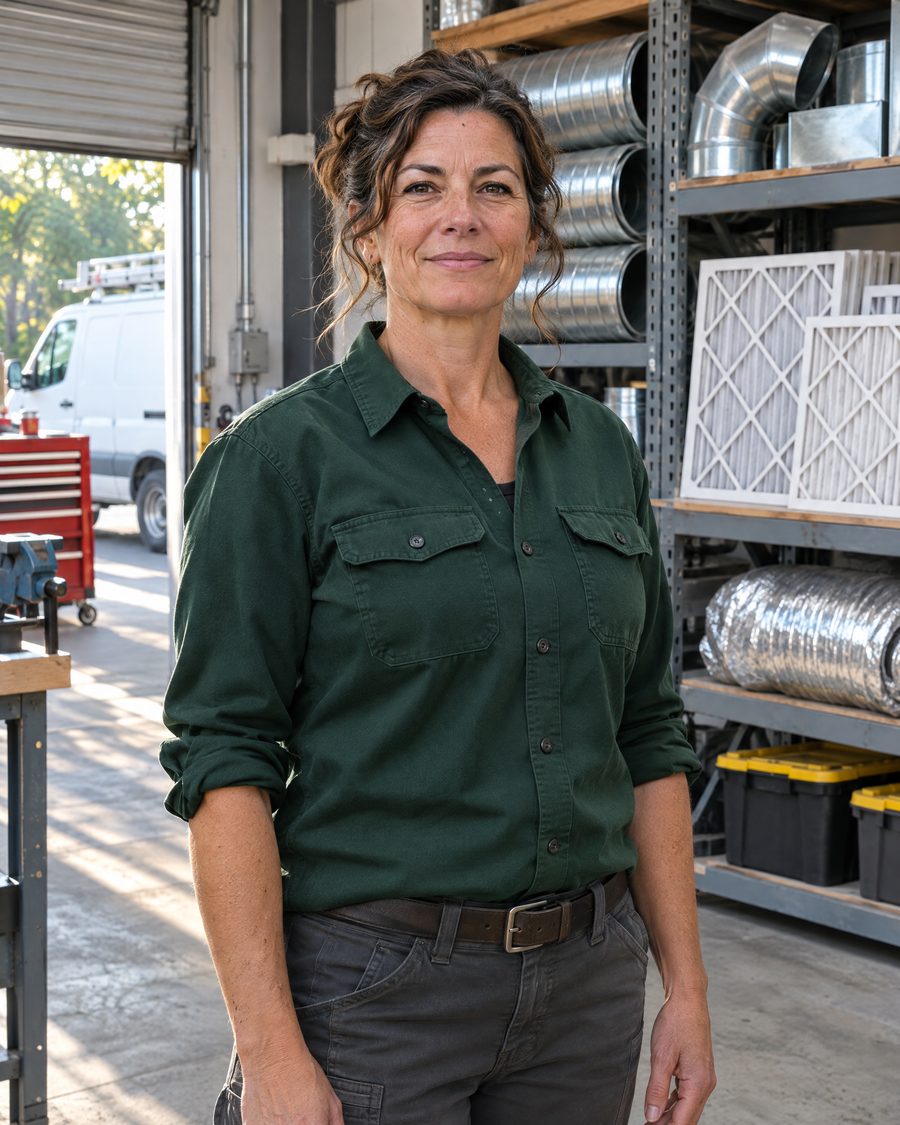
Corinne Haldane, owner and lead technician
Corinne answers the phone, walks the house, does the load calculation and writes the price. You deal with her from the first call to the visit before the next smoke season.
Ask Corinne a question
We usually answer the same day, and within the hour when a house has no heat or no cooling.
No heat or no cooling and someone at home is elderly, unwell or very young? Call or text now: 509-555-0163
Tell us what your house does in smoke season and in the cold
Smoke in the bedroom with the windows shut, an air conditioner that cannot keep up in a heat wave, a furnace that will not light on a January night. Send the form or call, and we will come and walk the house.
Book a visit
We usually answer the same day, and within the hour when a house has no heat or no cooling.
No heat or no cooling and someone at home is elderly, unwell or very young? Call or text now: 509-555-0163