
Duct cleaning and sealing in Spokane
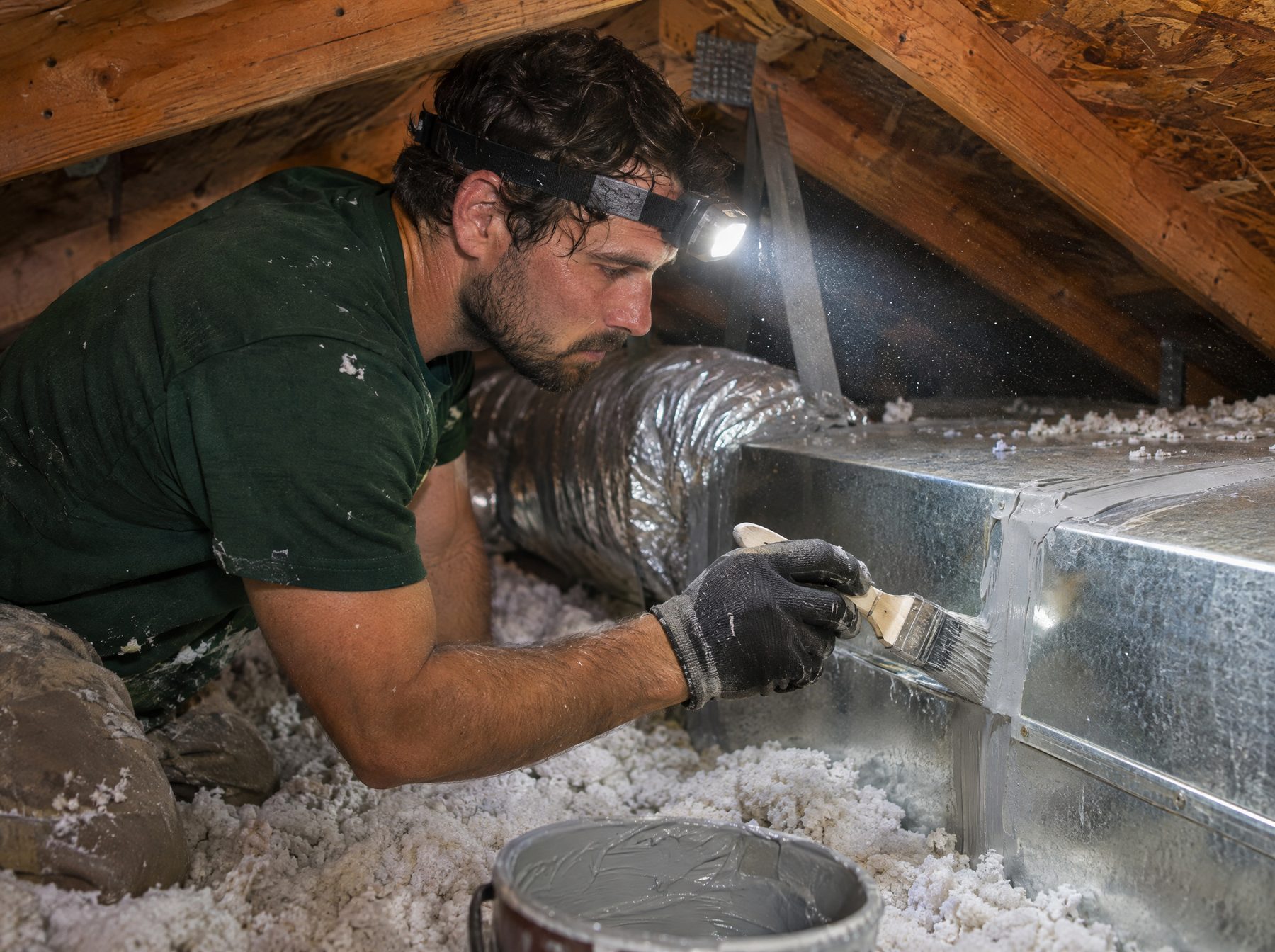
If the house smells of smoke with every window shut, the air is getting in some other way. Often it is the ducts: a return that leaks in the attic, the crawlspace or the garage, pulling outside air straight into the system. We find the leaks, seal them, clean the ducts when there is something to clean, and fit a filter that does not let air slip round it.
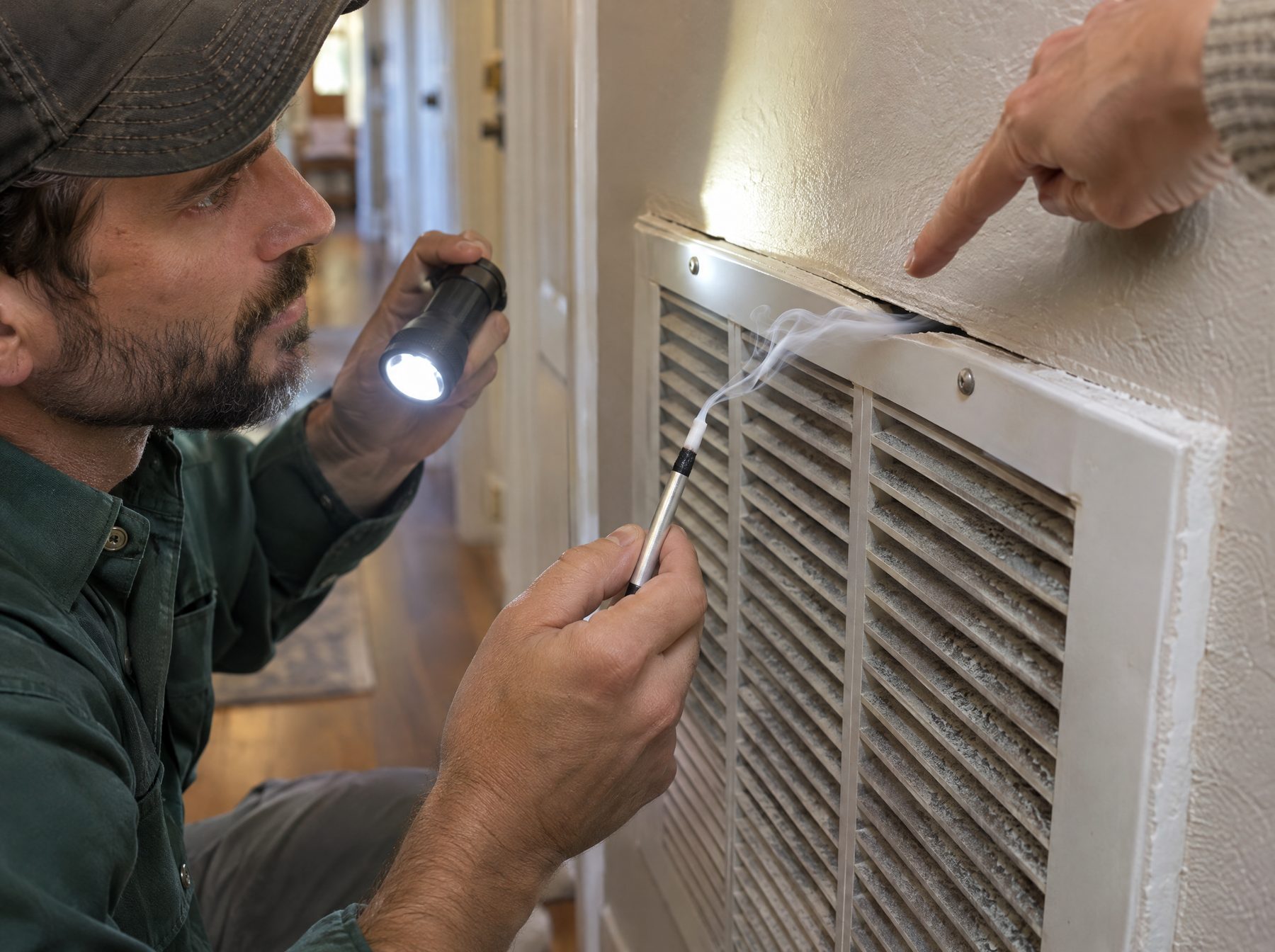
- Leaks found with a smoke pencil and a pressure test
- Joints sealed with mastic, not tape
- Filter rack fitted snug for MERV 13 where it fits
- Cleaning only when the ducts need it
Tell us what you notice in smoke season
We usually answer the same day, and within the hour when a house has no heat or no cooling.
No heat or no cooling and someone at home is elderly, unwell or very young? Call or text now: 509-555-0163
Three ways smoke gets in, and the fourth we look for
EPA's wildfire smoke guidance lists three ways smoke enters a house: through open windows and doors, through fans and HVAC systems that have a fresh air intake, and by infiltration through small openings, joints and cracks around closed windows and doors. You can shut the windows. The other two take a little more work.
The fourth path is the ducts themselves. A return duct runs under negative pressure: the blower is pulling on it. Any gap in a return that runs through the attic, the crawlspace or the garage pulls in the air around it, smoke and all, and sends it to every room. A panel in the garage wall that never got sealed can undo a good filter.
“Every September the house smelled like a campfire, even with the windows shut. Corinne put a smoke pencil to the return and found the panel in the garage wall pulling in air from the garage and the crawlspace. She sealed it, sealed the joints in the attic and fitted a filter rack that actually holds a MERV 13 snug. This summer the house smelled like the house.”
How a duct sealing visit goes
Half a day for most houses, longer when there is a lot of attic or crawlspace duct to reach.
We follow the return.
From the grilles in the rooms to the filter and the furnace or air handler, with a smoke pencil at every joint we can reach.
We test the system.
Where the job calls for it, a duct leakage test that puts a number on how much air the ducts lose or pull in.
We seal what leaks.
Mastic on the joints, the boots sealed to the drywall, the return panel sealed in the wall, the filter slot closed up.
We fit the filter.
A rack that holds the filter tight, rated as high as the blower can take, MERV 13 where it fits.
Why smoke season shapes the work
Spokane Clean Air's smoke day count and NOAA's summer normals at Spokane International Airport.
7.3days a year
Unhealthy air from wildfire smoke
Spokane Clean Air's average for 2017 to 2026
13MERV
The filter rating EPA suggests for smoke
Or as high as the fan and slot allow
2.06inches
Normal rain June through August
Dry summers, dusty ducts, smoky weeks
When duct cleaning is worth it, and when it is not
Cleaning moves what is in the ducts. Sealing stops more from getting in. Most houses need the second more than the first.
Worth cleaning
After a remodel or drywall work, when there is visible debris in the ducts, or with signs of rodents or insects.
Seal first
Dust that comes back a day after you clean, a smoky smell with the windows shut, rooms that never get enough air. Usually a leak.
Fix the filter
Black lines around the edge of the old filter mean air has been going round it. A snug rack does more than a pricier filter.
What gets into the air around Spokane, season by season
What the ducts and the filter are up against through the year.
| Season | What is in the air | What helps |
|---|---|---|
| Spring | Pollen, dust from dry fields, cottonwood fluff by June | A fresh filter, sealed returns, a clean outdoor coil |
| Summer | Wildfire smoke on the worst weeks | Windows shut, recirculate on, fan running, a snug MERV 13 filter where it fits |
| Fall | Leftover smoke, wood smoke as heating starts | A filter change after smoke season, the fall furnace visit |
| Winter | Wood smoke on still nights; Spokane Clean Air issues burn restrictions when fine particles build up | Sealed ducts, a sealed attic hatch, a clean filter |
When the ducts are part of a new system
Replacing a furnace, air conditioner or heat pump is the right time to fix the ducts, because the system is open and the new equipment is only as good as the air it gets. In the City of Spokane, the mechanical permit form notes that a duct leakage affidavit may be required for final inspection when HVAC equipment is replaced or installed in a home, and ductwork for a replaced furnace or air conditioner is covered under the appliance on the permit.
Outside the city, the permit comes from Spokane Valley, Liberty Lake, Cheney, Spokane County or, across the state line, Post Falls. We handle it either way, and the duct work goes on the quote as its own line.
Duct cleaning and sealing around Spokane Valley
We drive out from our office on the Spokane Valley floor. Each town has its own page with the drive, the houses we see there and the office that issues the permit, because that office changes as soon as you cross a city line, and again at the state line.
Spokane
About 10 miles, 14 minutes west. Permits through the City's Development Services Center, and gas work needs a City gas heating mechanic license.
Liberty Lake
About 8 miles, 14 minutes east. The City issues its own mechanical permits, even for a like for like furnace swap.
Mead
About 11.5 miles, 22 minutes north, on the road toward Mount Spokane. Unincorporated, so Spokane County issues the permit.
Cheney and Post Falls
About 26 miles southwest to Cheney, which runs its own building department, and 15 miles east across the line to Post Falls, Idaho.
Duct cleaning and sealing questions we hear most
How does wildfire smoke get into a closed house?
EPA names three ways: through open windows and doors, through fans and HVAC systems with a fresh air intake, and through small openings, joints and cracks around closed windows and doors. Leaky return ducts in an attic, crawlspace or garage add another path, because they pull that outside air into the system and blow it into every room.
What filter should I use for smoke?
EPA's guidance is a MERV 13 filter, or the highest rating your system fan and filter slot can take, fitted snugly so air does not leak around it. Not every blower can push air through a MERV 13 filter, which is why EPA suggests asking an HVAC technician. We check yours and tell you what it can handle.
Should I run my system on recirculate during smoke?
Yes. If your system has a fresh air intake, close it or set it to recirculate on smoke days, as EPA advises. Running the fan keeps air moving through the filter. A portable air cleaner in a bedroom works well alongside it.
Is duct cleaning worth it?
Sometimes. After a remodel, with visible debris in the ducts, or with signs of pests, yes. For ordinary dust, sealing the leaks and fixing the filter usually does more, because dirty ducts are often a symptom of air getting in where it should not. We look before we recommend cleaning.
What is a duct leakage affidavit?
The City of Spokane's mechanical permit form says that, under the Washington State Energy Code, a duct leakage affidavit may be required before final inspection when HVAC equipment is replaced or installed in a home. When the job calls for it, we test the ducts and complete it.
Will sealing the ducts help in winter too?
Yes. A supply duct that leaks in the attic loses heat before it reaches the rooms, and a leaky return pulls in cold attic or crawlspace air. With 6,463 heating degree days in a normal Spokane year, that adds up.
Tell us what you notice in smoke season
A smoky smell, dust that comes back, rooms that get too little air. Where the furnace and ducts are: attic, crawlspace, garage or basement.
Book a duct check
We usually answer the same day, and within the hour when a house has no heat or no cooling.
No heat or no cooling and someone at home is elderly, unwell or very young? Call or text now: 509-555-0163