
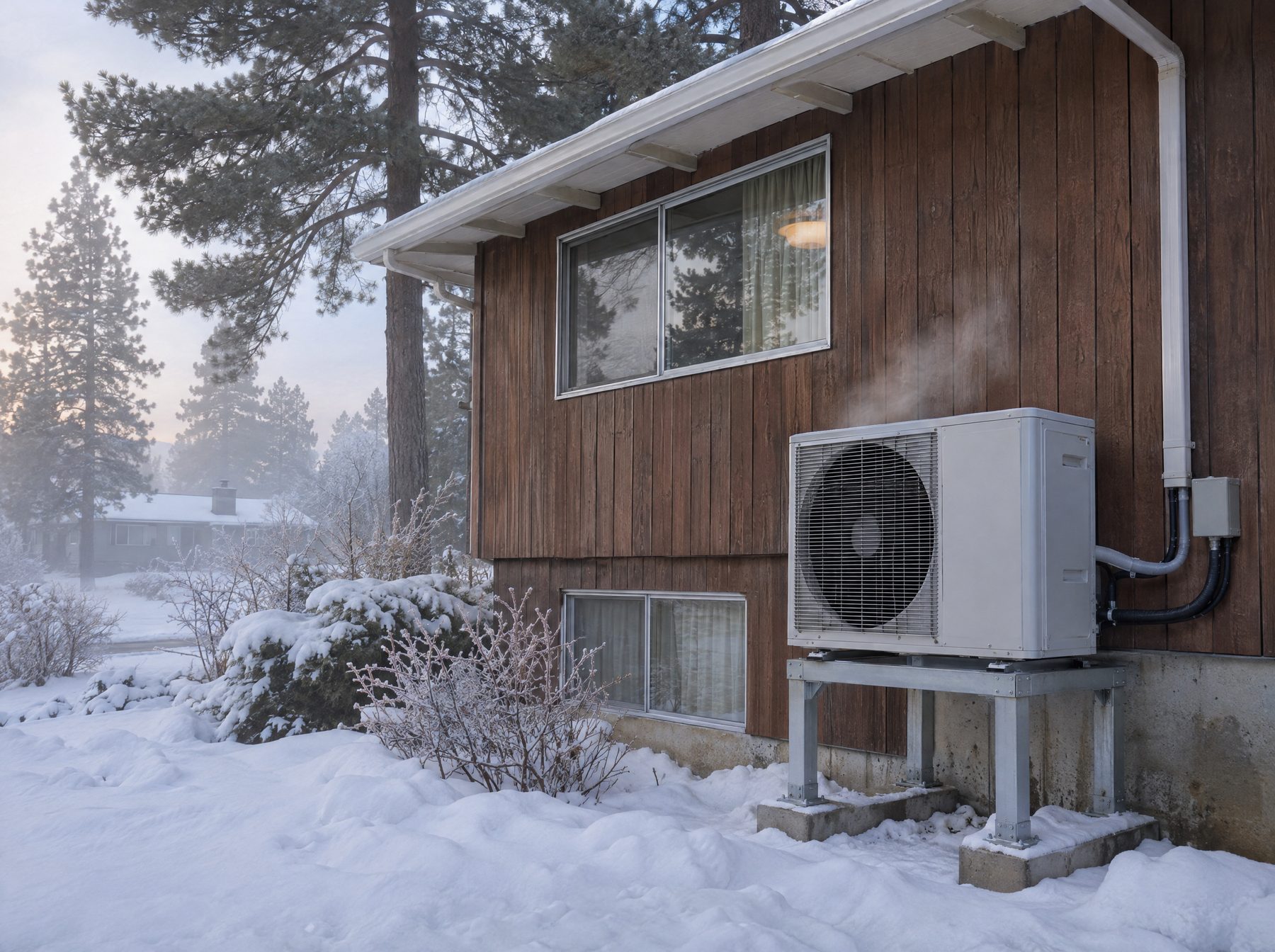
Heat pump installation in Spokane
A heat pump moves heat instead of making it: out of the house in summer, into it in winter. Around Spokane it has to do both jobs, cooling a shut house on the smoky weeks and heating through a long winter. We size it room by room, plan for the coldest stretches, and keep your gas furnace as the backup where that is the better answer for the house.
- Sized by a room by room load calculation
- A cold weather plan, with furnace backup where it fits
- Your air conditioner on smoke days
- Filter slot fitted for MERV 13 where the fan allows
Tell us about your house and what heats it now
We usually answer the same day, and within the hour when a house has no heat or no cooling.
No heat or no cooling and someone at home is elderly, unwell or very young? Call or text now: 509-555-0163
One system, two directions
Inside every heat pump is a loop of refrigerant that carries heat from one coil to the other. In summer it picks up heat from the air inside and dumps it outside, exactly like an air conditioner. In winter a reversing valve flips the loop, and the same system pulls heat out of the outdoor air and brings it in. There is usable heat in January air; a cold climate heat pump is built to keep collecting it as the temperature falls.
The question around Spokane is not whether a heat pump works in winter. It is how much of the winter it can carry for your particular house, and what takes over for the rest. That answer comes from the house: its size, its windows, its insulation, its ducts. So we measure the house before we name a size.
“We wanted a heat pump but were afraid of January. Corinne kept our gas furnace as the backup, sized the heat pump room by room and showed us when the furnace would take over. Through the smoke weeks it ran as our air conditioner with the windows shut. The first winter bill was lower and nobody was cold.”
The year a Spokane heat pump has to handle
From NOAA's 1991 to 2020 normals for Spokane International Airport.
6,463heating degree days
A normal year's heating load
Heating is the bigger half of the job
132nights
At or below freezing
Defrost cycles are part of normal winter running
2.2nights
At or below zero in a normal year
Rare, but those hours decide the backup plan
20.8days
At 90°F or hotter
The same unit cools the house on those days
Heat pump only, or a heat pump with backup?
There is no single right answer for every house. These are the three setups we install most, and when each one fits.
Heat pump with your gas furnace
The heat pump does the cooling and most of the heating; the furnace you already have takes over in the coldest weather. Often the easiest step for a house that already has gas and a sound furnace.
Heat pump with electric backup
For houses without gas. Electric heat strips in the air handler carry the coldest hours. Sizing the heat pump well keeps those strips from running more than they need to.
Ductless heat pumps
For an addition, a finished basement, a room over the garage, or a house with no ducts. Each indoor head heats and cools its own space.
Your air conditioner on smoke days
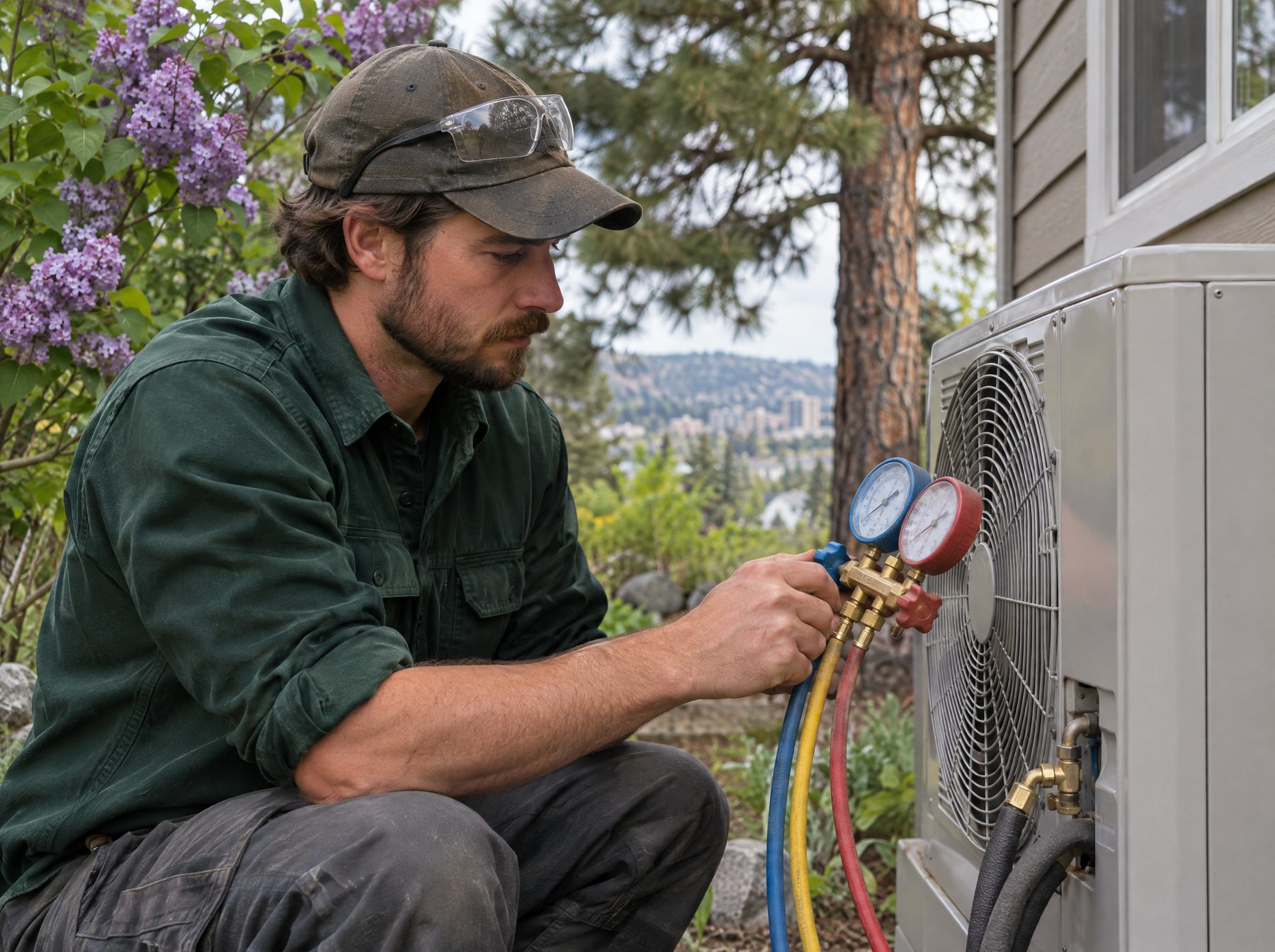
On the days the windows have to stay shut, a heat pump is your air conditioner. Spokane Clean Air counts an average of 7.3 unhealthy smoke days a year over 2017 to 2026, and they tend to land in the hot, dry weeks of late summer. A house that used to get by on open windows at night now needs a way to stay cool with them closed.
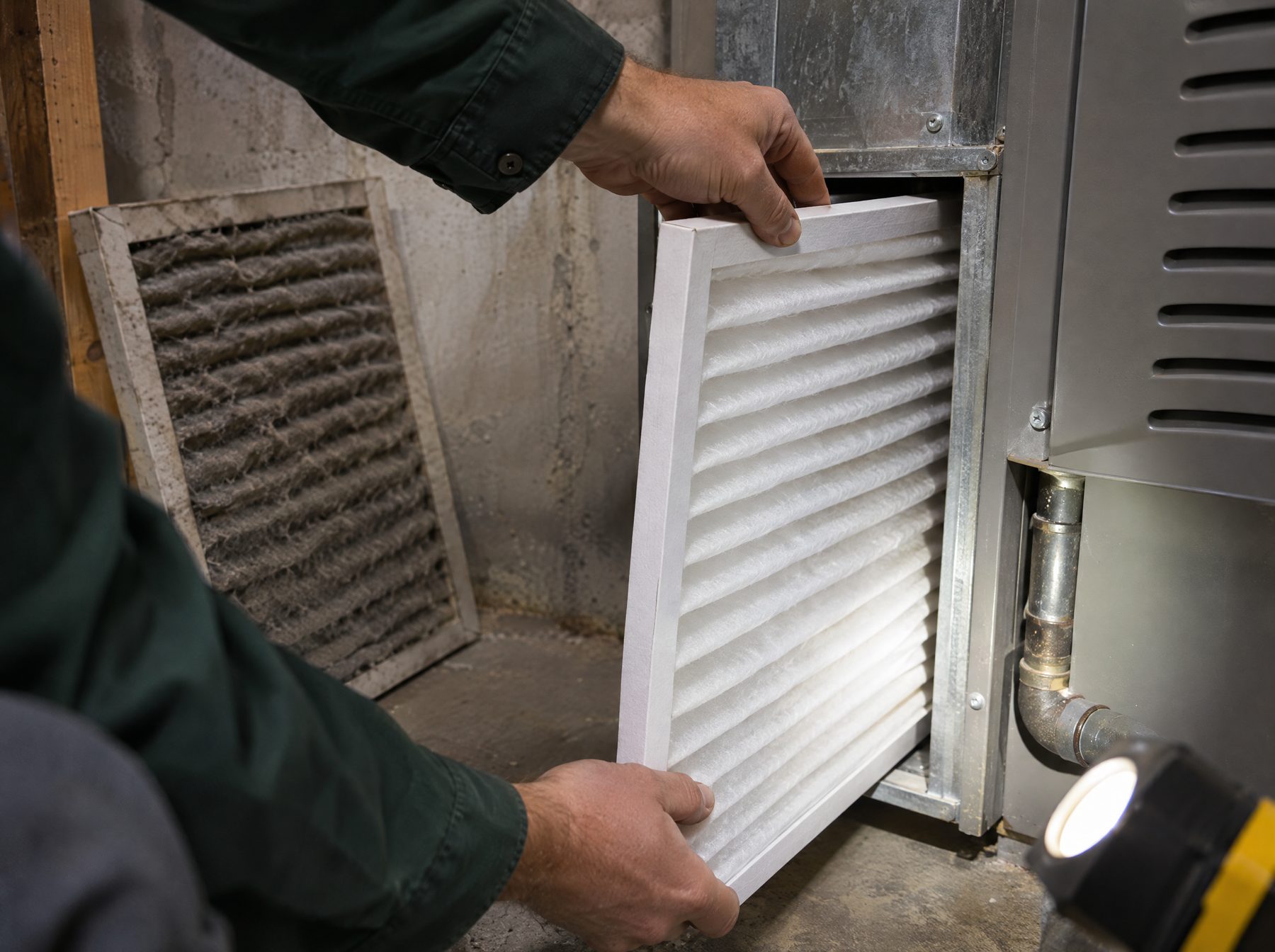
Because the system runs the air through its filter every time the fan is on, a heat pump install is a good time to fix the filter slot. EPA's smoke guidance suggests a MERV 13 filter, or the highest rating the system fan and filter slot can take, fitted snugly so air does not leak around it. We check what your blower can handle and build the rack to match.
How a heat pump install goes
Most installs take one or two days once the equipment is here. The planning happens before that.
We measure the house.
A room by room load calculation: walls, windows, insulation, the direction each room faces, the ducts.
We plan the cold weather.
Where the heat pump hands off to backup heat, and how the thermostat decides.
We install and set it up.
Outdoor unit on a stand above the snow line, indoor coil matched, ducts sealed where we can reach, filter rack fitted.
We come back in the other season.
A check the first time it runs the other way, cooling if we installed in winter, heating if we installed in summer.
What the numbers on a heat pump quote mean
Federal minimums for split systems, and what to ask about each line.
| Rating | What it measures | What to look for |
|---|---|---|
| SEER2 | Cooling efficiency over a season | At least 14.3 for a split system heat pump |
| HSPF2 | Heating efficiency over a season | At least 7.5; in a heating heavy climate this is the number that matters most |
| Capacity | How much heat it moves, in Btu per hour | Set by your load calculation, not by the old unit's label |
| Cold weather capacity | How much heat it still delivers in the cold | Ask for the figure at low outdoor temperatures, not only the rated one |
| Refrigerant | What runs in the loop | New systems since January 1, 2025 use refrigerants with a global warming potential of 700 or less |
Heat pumps around Spokane Valley
We drive out from our office on the Spokane Valley floor. Each town has its own page with the drive, the houses we see there and the office that issues the permit, because that office changes as soon as you cross a city line, and again at the state line.
Spokane
About 10 miles, 14 minutes west. Permits through the City's Development Services Center, and gas work needs a City gas heating mechanic license.
Liberty Lake
About 8 miles, 14 minutes east. The City issues its own mechanical permits, even for a like for like furnace swap.
Mead
About 11.5 miles, 22 minutes north, on the road toward Mount Spokane. Unincorporated, so Spokane County issues the permit.
Cheney and Post Falls
About 26 miles southwest to Cheney, which runs its own building department, and 15 miles east across the line to Post Falls, Idaho.
Heat pump questions we hear most
Will a heat pump keep my house warm in a Spokane winter?
For most of the winter in most houses, yes, when it is sized for the house and set up for the cold. A normal year at Spokane International Airport has 6,463 heating degree days, 132 nights at or below freezing and about 2 nights at or below zero (NOAA 1991 to 2020 normals). The coldest stretches are what a heat pump has to be planned for. We size it with a load calculation and, in many houses, keep the gas furnace to take over when it gets really cold.
What does a furnace backup mean?
A heat pump and a gas furnace on the same ductwork, run by one thermostat. The heat pump cools in summer and heats on mild and cool days. When the outdoor temperature drops to the point where the heat pump cannot keep up with the house, the furnace takes over. We set that switch point from your house's heat loss, not from a factory default. Houses without gas use electric backup heat inside the air handler instead.
Why does my heat pump blow steam in winter?
That is the defrost cycle. On cold, damp days frost builds on the outdoor coil. The heat pump briefly runs in reverse to melt it, and the meltwater steams off. A few minutes of steam now and then is normal. A coil that stays iced over, or a unit buried in snow, needs a look. That is also why we set outdoor units on a raised stand here.
What efficiency does a new heat pump have to meet?
Under the federal standard, split system heat pumps must reach at least 14.3 SEER2 for cooling and 7.5 HSPF2 for heating. We show you where the system we quote sits against those numbers, and what the higher ratings buy you in a heating heavy climate like this one.
Is there a rebate or a tax credit?
Avista runs Washington single family energy rebates for its customers. We do not quote amounts or equipment lists, because the utility sets and changes them; check its page or ask us to help you look. Idaho customers have a separate Avista page. The federal 25C tax credit ended for systems placed in service after December 31, 2025.
Tell us about your house and what heats it now
The age of the furnace or air conditioner you have, gas or no gas, and the rooms that are hardest to keep comfortable. We will take it from there.
Book a heat pump visit
We usually answer the same day, and within the hour when a house has no heat or no cooling.
No heat or no cooling and someone at home is elderly, unwell or very young? Call or text now: 509-555-0163