
HVAC maintenance plans in Spokane
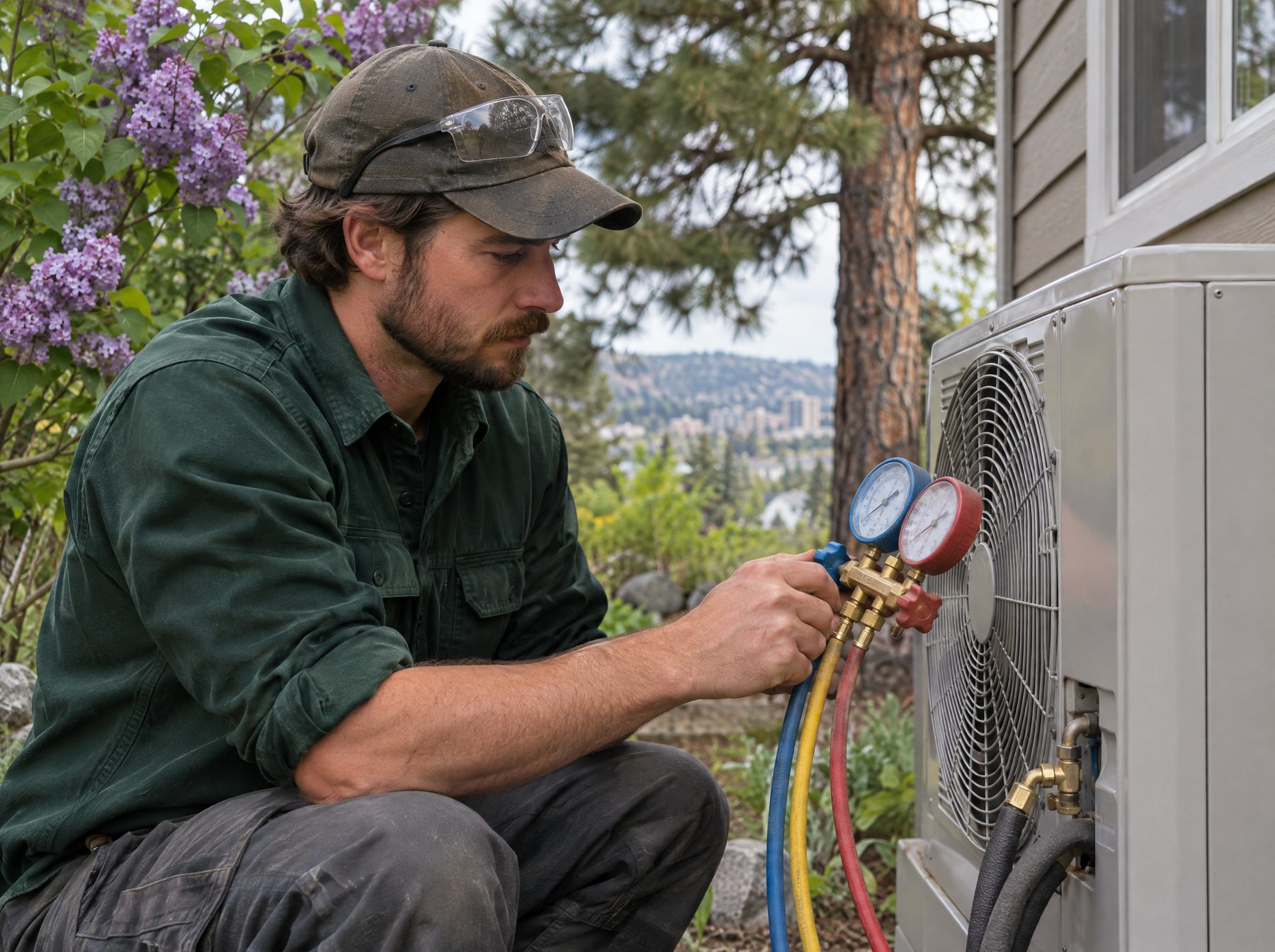
Two visits a year, timed to the two halves of a Spokane year. In spring we get the house ready for heat and smoke: filter, coil, drain, fresh air damper. In fall we get it ready for the cold: furnace or heat pump, venting, safeties, a fresh filter after smoke season. Problems found early are smaller and cheaper than a breakdown on the worst day.
- A spring visit before smoke season
- A fall visit before the cold
- Filter changed at both visits
- Written report after each one
Tell us what you have and when it was last checked
We usually answer the same day, and within the hour when a house has no heat or no cooling.
No heat or no cooling and someone at home is elderly, unwell or very young? Call or text now: 509-555-0163
Two visits, timed to the two halves of the year
A Spokane year asks two different things of one system. In late summer it has to cool a house that is shut tight against smoke, and clean the air while it does. In winter it has to heat through 6,463 heating degree days, the bigger half of the job by far. Each half has its own worn parts, so we visit before each one.
The spring visit is about the cooling side and the air. The fall visit is about the heat and the safeties. The filter connects them: the one that caught smoke in August should not still be in the slot when the furnace starts running hard.
“Every September the house smelled like a campfire, even with the windows shut. Corinne put a smoke pencil to the return and found the panel in the garage wall pulling in air from the garage and the crawlspace. She sealed it, sealed the joints in the attic and fitted a filter rack that actually holds a MERV 13 snug. This summer the house smelled like the house.”
What we do at each visit
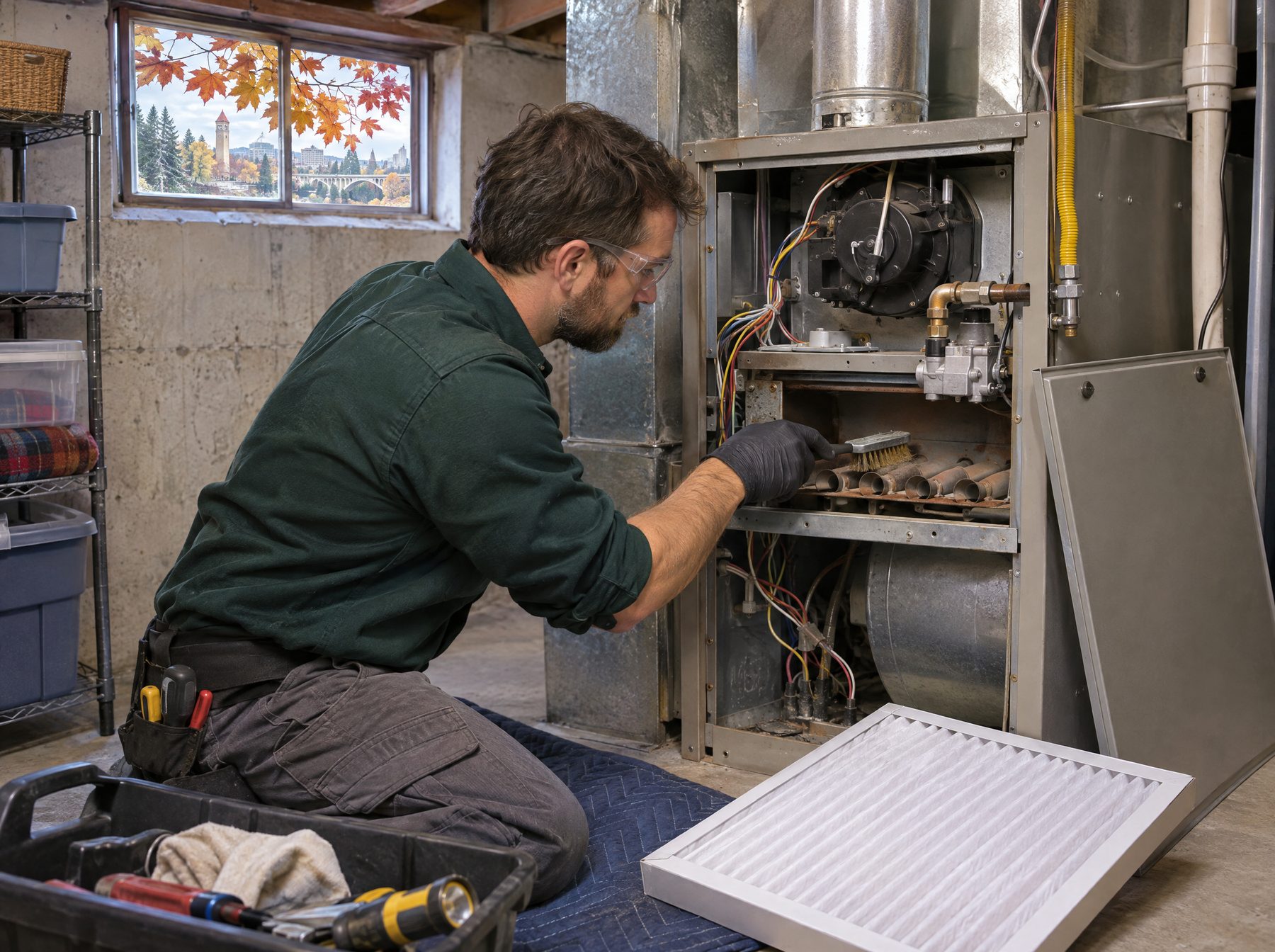
The written report after each visit lists what we checked, what we found, and anything to watch.
| Spring, before smoke season | Fall, before the cold |
|---|---|
| New filter, MERV 13 where the blower can take it | New filter after smoke season |
| Outdoor coil cleaned, fan and motor checked | Burners, igniter and flame sensor cleaned and checked |
| Refrigerant pressures and temperatures | Venting, intake and condensate drain |
| Capacitor and contactor tested | Safety switches and limits tested |
| Fresh air damper set to close on smoke days | Heat pump defrost and backup heat switch point |
| Thermostat set up for recirculate | Thermostat schedule for winter |
Why twice a year here
NOAA's 1991 to 2020 normals at Spokane International Airport and Spokane Clean Air's smoke day count.
7.3days a year
Unhealthy smoke days, 2017 to 2026
The spring visit gets the filter and damper ready
20.8days
At 90°F or hotter
When worn capacitors give out
6,463heating degree days
A normal year's heating load
The fall visit is the bigger one
132nights
At or below freezing
Months of steady furnace running
How a maintenance plan works
Simple on purpose.
We set it up on the phone.
What you have, how old it is, and when it was last looked at.
We book the spring visit.
Usually April to early June, before the hot, dry weeks.
We book the fall visit.
Usually September to October, before the first long cold stretch.
You get a report each time.
What we checked, what we found, what to watch, and a written price for anything that needs fixing.
What you can do between visits
Three things that make the biggest difference, and none of them need tools.
Change the filter after smoke
A filter that caught a smoky week is loaded. Change it, and the furnace and air conditioner both breathe easier.
Keep the outdoor unit clear
Two feet of space around it, no grass clippings on the coil, snow off the top and the sides in winter.
Watch the vent pipes in snow
White PVC pipes on the side wall of a high-efficiency furnace can be blocked by drifts. Clear them after a storm.
Maintenance plans around Spokane Valley
We drive out from our office on the Spokane Valley floor. Each town has its own page with the drive, the houses we see there and the office that issues the permit, because that office changes as soon as you cross a city line, and again at the state line.
Spokane
About 10 miles, 14 minutes west. Permits through the City's Development Services Center, and gas work needs a City gas heating mechanic license.
Liberty Lake
About 8 miles, 14 minutes east. The City issues its own mechanical permits, even for a like for like furnace swap.
Mead
About 11.5 miles, 22 minutes north, on the road toward Mount Spokane. Unincorporated, so Spokane County issues the permit.
Cheney and Post Falls
About 26 miles southwest to Cheney, which runs its own building department, and 15 miles east across the line to Post Falls, Idaho.
Maintenance plan questions we hear most
What does the spring visit include?
The cooling side and the air: a new filter (MERV 13 where the blower can take it), the outdoor coil cleaned of cottonwood fluff and dust, the refrigerant pressures and temperatures checked, the drain flushed, the fresh air damper checked so it can close on smoke days, and the thermostat set up for recirculate.
What does the fall visit include?
The heating side: a new filter after smoke season, the burners, igniter and flame sensor on a furnace, the venting and intake pipes, the safety switches, the heat exchanger inspected where we can see it, and on a heat pump the defrost and the backup heat switch point.
Why time the visits to smoke season and the cold?
Because those are the two times the system is under the most strain. Spokane Clean Air counts an average of 7.3 unhealthy smoke days a year over 2017 to 2026, mostly in late summer, and a normal winter brings 132 nights at or below freezing. A visit just before each one catches the worn part before it fails.
How often should I change the filter?
Check it monthly and change it when it looks loaded, and always after a smoky stretch. Avista customers can sign up for its Furnace Filter Reminder Program, which sends reminders by email. On a plan, we change it at both visits.
Do members get anything else?
Plan members are booked first when we are busy in a heat wave or a cold snap, and we keep a record of the system so the next technician knows its history. We will go over the details and the price on the phone; nothing is automatic until you say yes.
Do you service systems you did not install?
Yes. Most of the systems we maintain were installed by someone else. On the first visit we note the model, age and condition so you know where it stands.
Tell us what you have and when it was last checked
Furnace, air conditioner, heat pump or a mix, roughly how old, and when anyone last looked at it. We will set up the first visit.
Start a maintenance plan
We usually answer the same day, and within the hour when a house has no heat or no cooling.
No heat or no cooling and someone at home is elderly, unwell or very young? Call or text now: 509-555-0163